
 Léon BRUNEAU Jul 31, 2026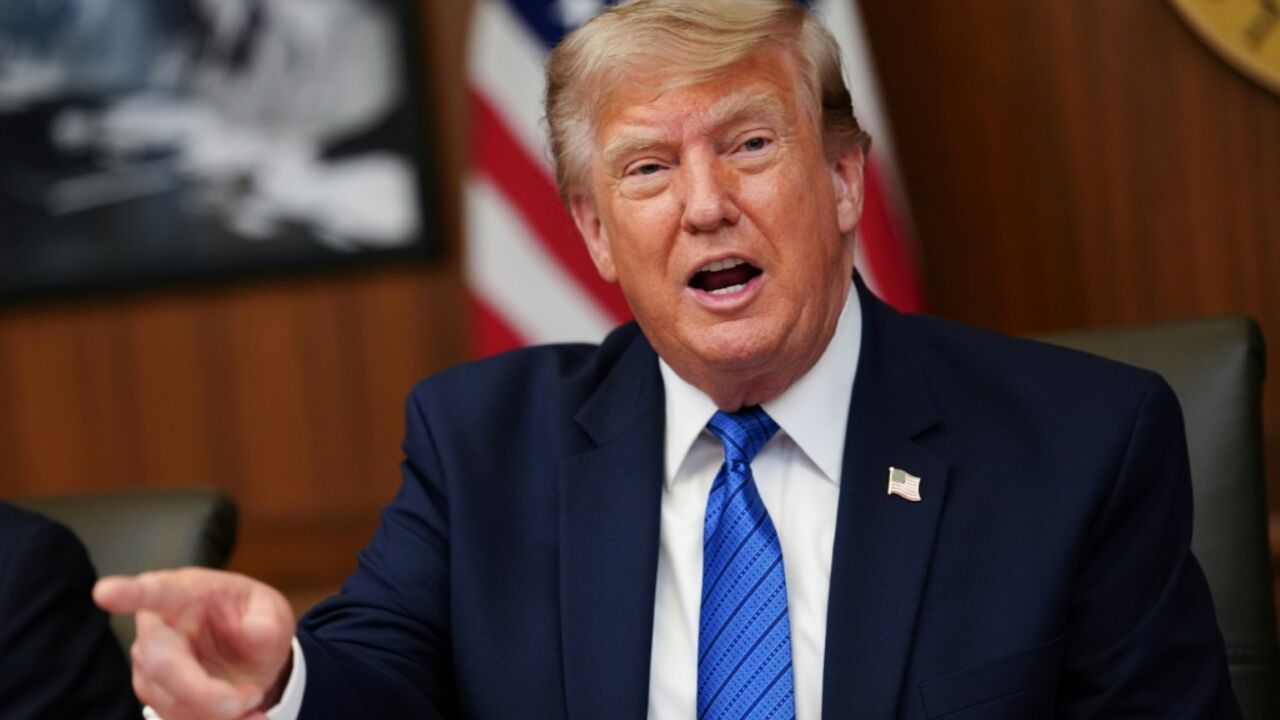
US President Donald Trump has secured a welcome Middle East diplomatic breakthrough with an agreement for Hamas militants to disarm, but remains mired in the conflict with Iran, searching for an exit strategy that continues to elude him.
After five months of war, Trump's room for maneuver seems extremely limited, and he gives the impression of increasingly making up his plans as he goes along.
"We're going to be hitting them very hard because it's our turn to hit them," Trump said Wednesday of upcoming strikes against Tehran in retaliation for its attacks against bases hosting US forces in Jordan.
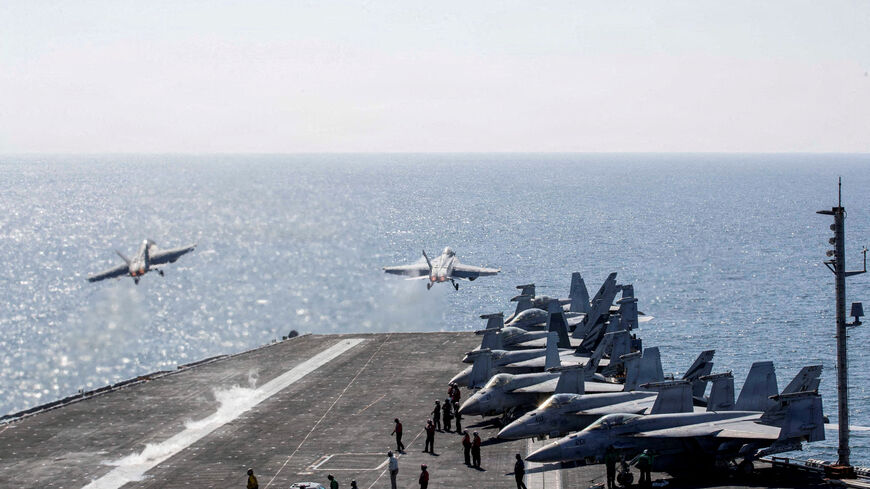
The Republican leader has clearly demonstrated the limits of his so-far unsuccessful efforts to attempt to force Iranian capitulation through air strikes.
As the conflict in the Middle East spreads from Iraq to Saudi Arabia to even Egypt, the US president finds himself at an impasse.
He convened members of his cabinet at the Camp David presidential retreat on Friday -- but gave no indication of a possible shift in strategy.
Citing unnamed US officials, NBC News reported earlier this week that Trump erupted in anger during a recent White House meeting and was "exasperated" by his limited available options to end the war.
The situation effectively largely depends on Tehran.
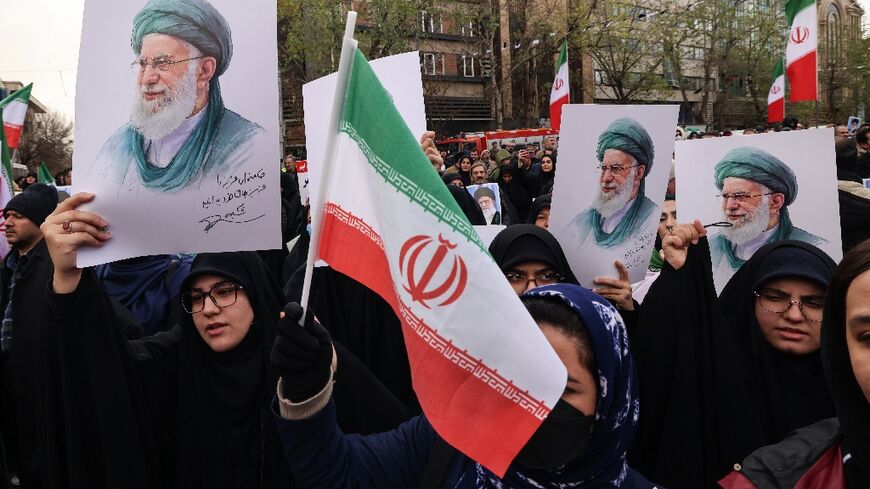
After the US launched strikes in concert with Israel against Iran on February 28 -- killing numerous officials, including Iran's supreme leader Ali Khamenei -- things have not gone according to plan for Trump.
- 'No quick solutions' -
The US president spoke earlier in the conflict of a four- to six-week timeline for the offensive, which he says is aimed at preventing Tehran from acquiring a nuclear weapon.
While US officials maintain that they have achieved key military objectives, destroying Iran's navy and degrading its ballistic missile capabilities, the conflict is now centered on control of the Strait of Hormuz, where Tehran has disrupted key maritime traffic with attacks on shipping vessels.
That seems to have caught Washington off guard, and a June 17 agreement to halt the fighting has already broken down.
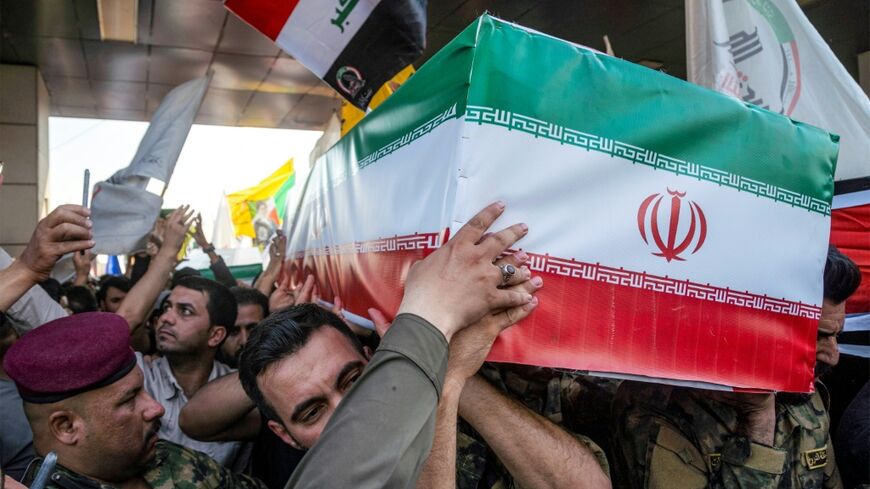
The US military has since carried out repeated strikes on Iranian military targets, while Tehran's Revolutionary Guards have retaliated by striking US bases and allies in the region.
"It is hard to see why this approach would work now when it hasn't worked over the past five months," Richard Haass, the former president of the Council on Foreign Relations, wrote in a Friday newsletter.
Karen Young, a senior fellow at the Middle East Institute, said the "conflict is still in early stages... We should be prepared for prolonged disruption."
"This is a conflict that has no quick solutions really, even with a regime transition that could lead to more instability in the region rather than less," she told journalists this week.
That is especially true now that attacks on Saudi Arabia and other wealthy, oil-producing Gulf states have left them weakened.
- Unpopular war-
In the United States, the war is largely unpopular, especially due to higher gas prices that have angered consumers.
An average of polls compiled by political expert Nate Silver and updated Thursday shows that 58.3 percent of Americans oppose the war -- a figure that has been steadily rising since March -- while 37.4 percent say they support it.
The issue is politically explosive, with November midterm elections just about three months away -- contests that are historically difficult for the party that controls the White House, and which could see Trump lose Republican majorities in the House and Senate.
Alex Vatanka, another senior fellow from the Middle East Institute, summed up the situation, describing it as a "lose-lose equation" in which "neither side is benefiting."
lb/wd/sst
You're reading a free AL-MONITOR Original
Want more like this?
AL-MONITOR All-Access gives you unlimited access to all our journalism, the full Daily Briefing, exclusive interviews, premium newsletters, and live events — for less than $2/week.
Terms and PrivacyRelated Articles
Iran’s new calculus: Strike first, talk later
 Elizabeth Hagedorn In Washington, DC, reporting on diplomacy, regional politics, human rights
Trump faces impasse over Iran war
Agence France-Presse
Bored of peace? Trump keeps choosing war
Agence France-Presse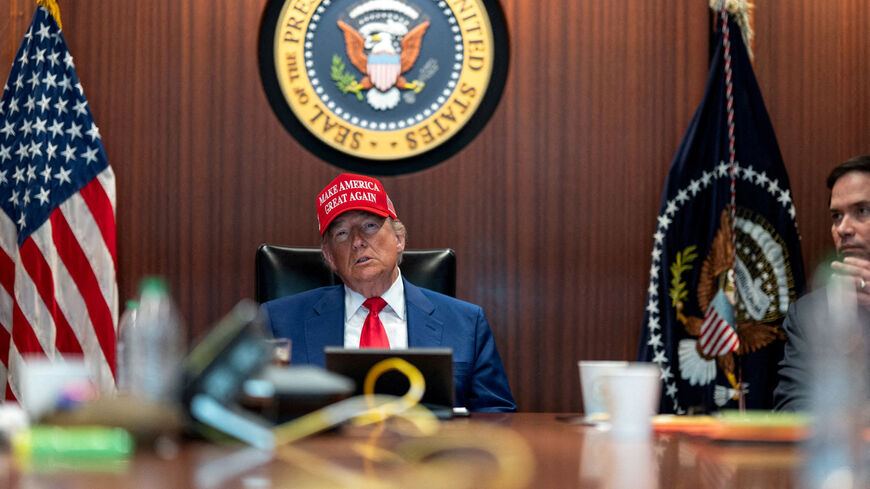
Analysis-Iran standoff could leave Trump worse off than before he went to war
Related Newsletters
 Newsletter: Daily Briefing
 Iran kills one in Kuwait, targets Egypt for first time
 Ezgi Akin In Ankara, reporting on diplomacy, EU-Turkey ties, NATO
  Newsletter: Security
 Iran war reveals limits of US air power
 Jared Szuba In Washington, DC, reporting on defense, national security, military
  Newsletter: Business & Tech
 Iran: Tariffs, comms blackout, violence
 Jack Dutton In Bristol, reporting on regional business, climate change, AI, tech
  Newsletter: Security
 Precision munitions run low
Jared Szuba In Washington, DC, reporting on defense, national security, military