


Election sketchbook
On the trail of the Negeri Sembilan campaignBy
Chen May Yee
Published: Aug 01, 2026, 05:00 AM
Scroll downFederal Route 51 connects the state capital Seremban with Kuala Pilah to the east, cutting through the Ulu Bendul forest reserve. During the election campaign, red and blue party flags lined the road, far outnumbering the wildlife-crossing warning signs.
Along the way, locals often tell visitors that things are different in Negeri Sembilan.
There is the distinct architectural style of the roofs, resembling sickles pointing towards the sky. Then there are the matrilineal social customs, brought centuries ago by Minangkabau settlers from Sumatra to this Malaysian state just south of Selangor.
Instead of hereditary succession, the ruler of Negeri Sembilan is elected by four local chieftains from among the state’s royals.
Recently, a dispute between the four chieftains and the current ruler erupted into the open.
The chieftains proclaimed a challenger, while state and federal leaders stood by the incumbent.
This eventually led to the dissolution of the state assembly and the calling of snap polls on Aug 1.
The system may be ancient, but it has modern-day consequences at the ballot box and beyond.
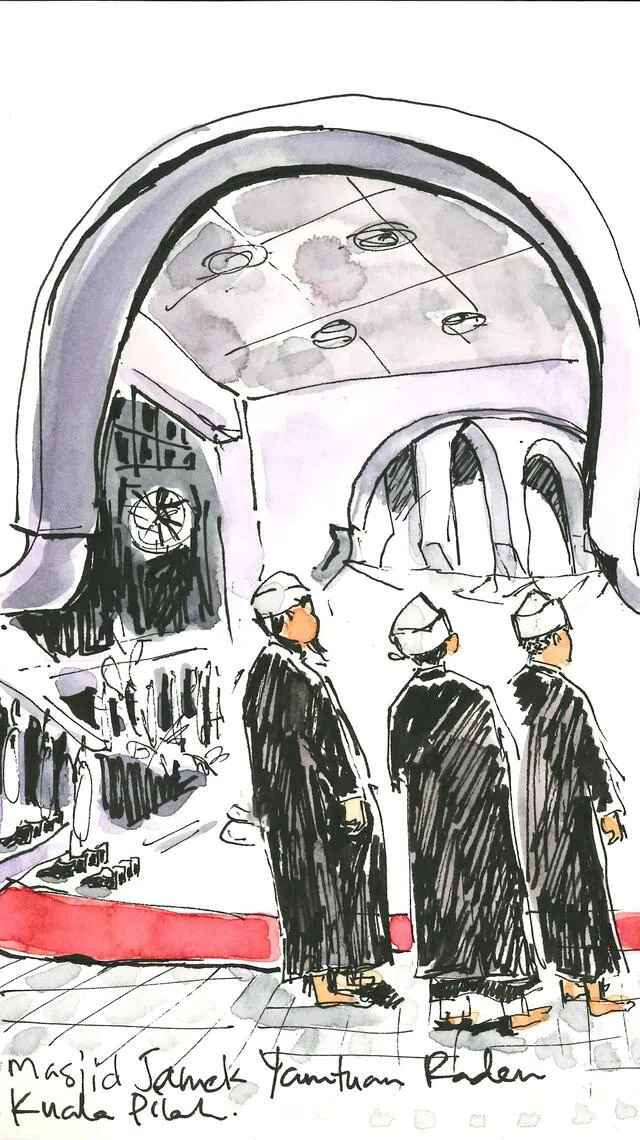
Each Friday, the state’s ruler, Tuanku Muhriz Tuanku Munawir, prays at a different mosque across Negeri Sembilan. Last week, it was the turn of Masjid Jamek Yamtuan Raden in Kuala Pilah to roll out the red carpet.
The Yamtuan, as he is known, stepped out of his black multi-purpose vehicle and was ushered inside, shaded by a yellow umbrella – the royal colour – held aloft by an aide.
As he left the mosque after prayers, the crowd shouted “Daulat Tuanku!”, meaning “Long Live Tuanku”.
The mosque can accommodate 1,500 worshippers, and it was a “full house or even more” that day, said Abdul Aziz, the muezzin – or bilal, in Malay – who performs the call to prayer.
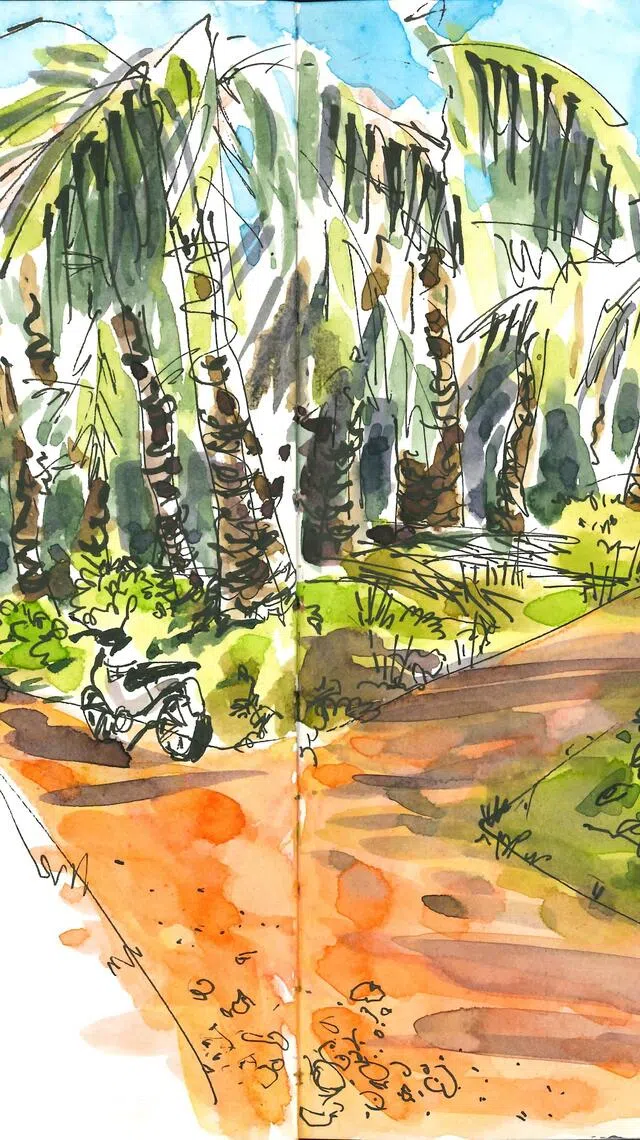
Deep in the eastern interior of Negeri Sembilan lie the pioneer settlements known as FELDA, short for the Federal Land Development Authority. Formerly planted with rubber trees and now largely covered by oil palms, FELDA estates around the country used to be known as a “fixed deposit” for the Barisan Nasional (BN) coalition.
But after years of financial mismanagement, dashed hopes and a government bailout in 2019, that is no longer the case.
To further complicate matters, while BN is part of Prime Minister Anwar Ibrahim’s Pakatan Harapan or PH-led government at the national level, it is cooperating with the opposition Perikatan Nasional at the state level.
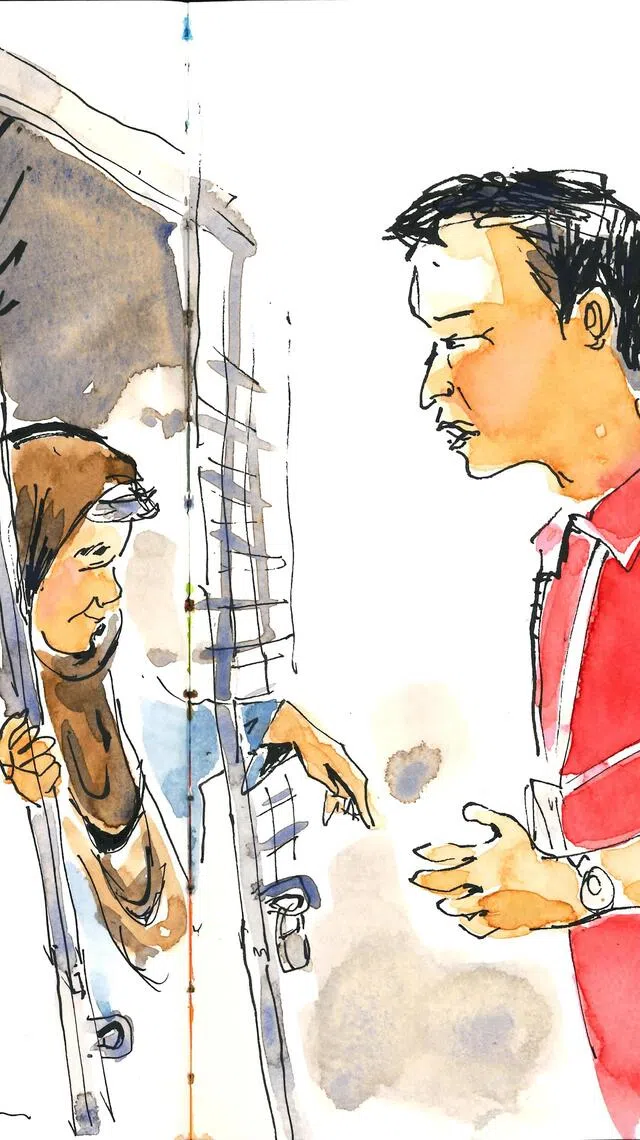
Zainal Fikri is the PH candidate for Sungai Lui, which BN won by a whisker at the last election. About 70 per cent of the constituency’s 20,000 voters live in FELDA settlements. The second and third generations of settlers want better housing and local jobs, he said.
The former school teacher, who goes by Cikgu Zainal, said he would work to bring in investors to open food, furniture and other small factories so young people would not have to move away to find work.
“If I win here, I promise to solve their problems,” he said.

Shah Nazmi Abdullah, 19, is a grandson of FELDA settlers. He is home from university in a neighbouring state, where he is studying for a diploma in statistics. In the future, he hopes to work at a bank.
He reckons the older generation will likely stick with BN’s UMNO for its emphasis on protecting Malay interests. Nazmi said he might vote for PH.
He is tired of the “sentimen kaum” – racial sentiment – on social media. “I just hate it,” he said. “Just live together lah.”
Transportation is a hot issue here.
Cranes hovered above the clock tower at the old Seremban railway station, which dates back to 1910. Construction is in full swing on a new RM100 million (S$31.5 million) station building that is set to open in 2027.
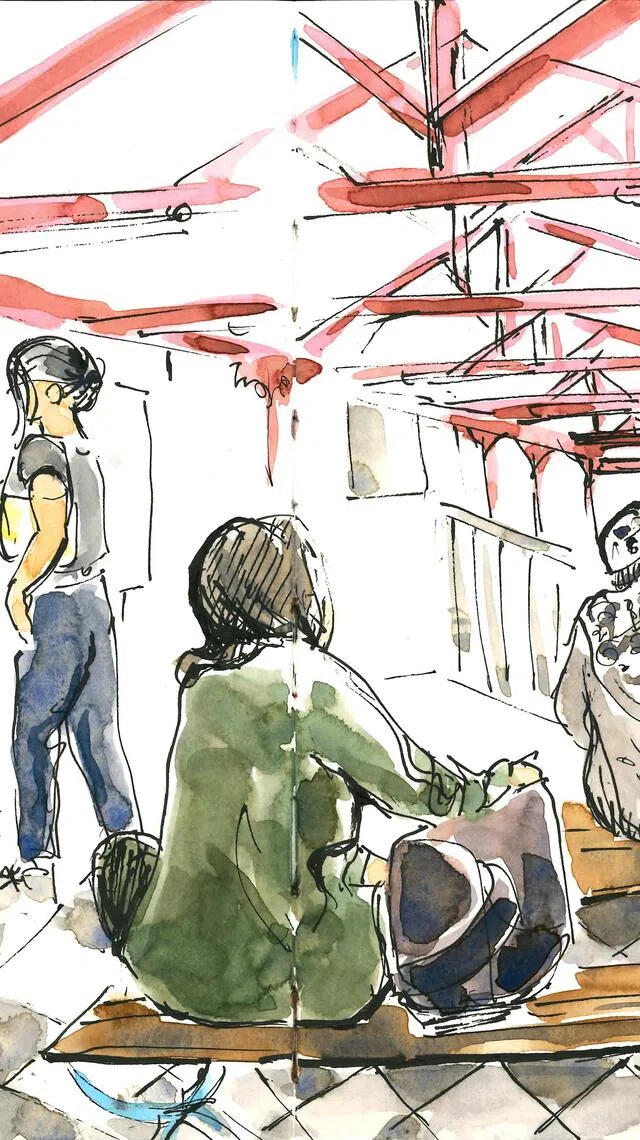
Badrina Aqeelah Mohd Zawawi, 19, was waiting for a train to Kuala Lumpur to visit an aunt. She arrived three hours early only to be told that some train services were “under maintenance”. She had to wait another hour.
She is pursuing a diploma in textile and clothing design at a university in nearby Kuala Pilah. She said that it is tough – “susah” – being a student. “Food is expensive.”
She has not decided who to vote for. The government, she said, should “take (better) care of its people, the poor and the needy”.
Indeed, the rising cost of living is a concern for many.
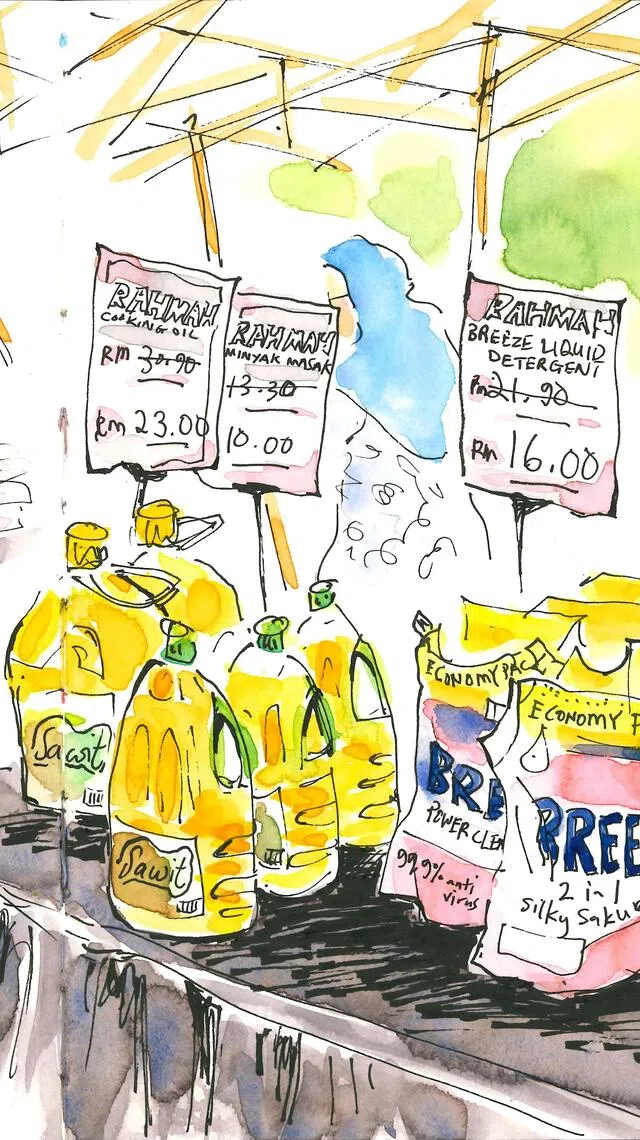
This pop-up market in Kuala Pilah was selling discounted household staples, from cooking oil and onions to AA batteries. The Ministry of Domestic Trade and Cost of Living regularly runs such markets around the country.
Trays of 30 “Grade C” eggs were going for RM8.10 instead of RM9.30, and 5kg bags of imported white rice were RM13.20 instead of the usual RM17.50.
One woman browsed the range of fabric softeners.
“Hmm,” she said to no one in particular. “Takde Downy,” she noted, lamenting the lack of the popular brand of fabric softener.
Westward, on the coast, the once-vibrant resort town of Port Dickson is looking a bit run-down.
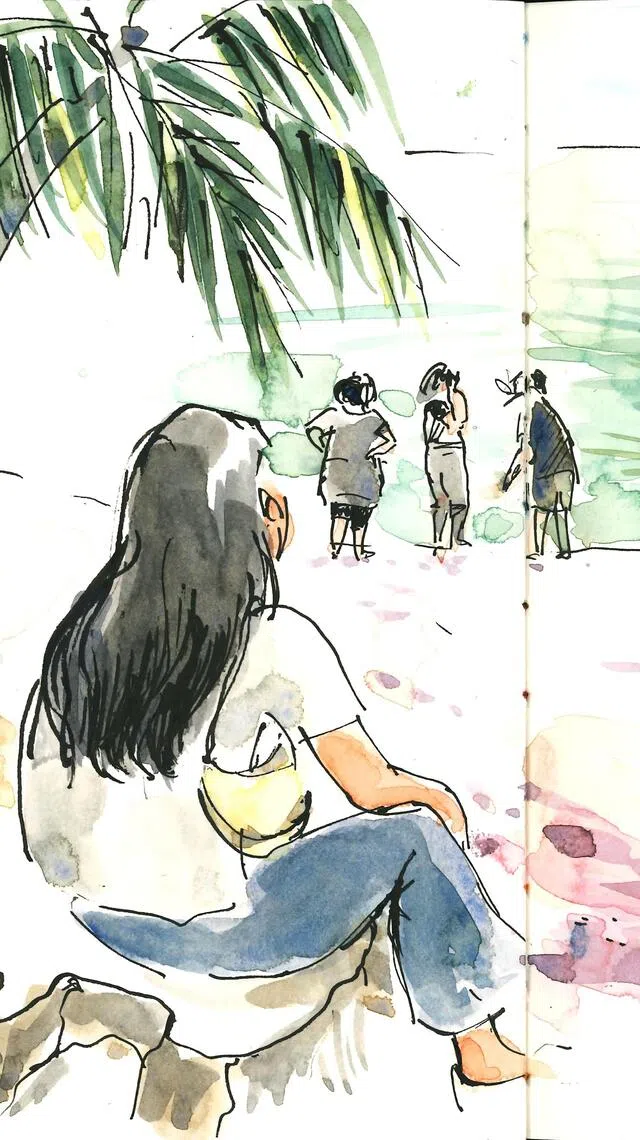
At the popular Telok Kemang beach, a sprinkling of bathers bobbed in the sea as tourists clung on for dear life aboard banana boat rides pulled by speedboats.
Nearby loomed the skeleton of an abandoned development, its beams and columns standing without walls or a roof. The ground floor had turned into a place to park boats and jet skis.
Over the years, successive governments have promised to revive the local economy, and there are currently plans for a free trade zone and an artificial intelligence-powered container port, among other projects. But that is still in the future.
For now, at least, there is an evening by the beach to enjoy. And another selfie to take.
Chen May Yee (@mayyee.chen on Instagram) is a Malaysian journalist and sketch artist and former copyeditor at The Straits Times.