
- Cluster munitions
- Protected persons: Civilians
- Conduct of hostilities and protection of civilians
- Explosive weapons in populated areas
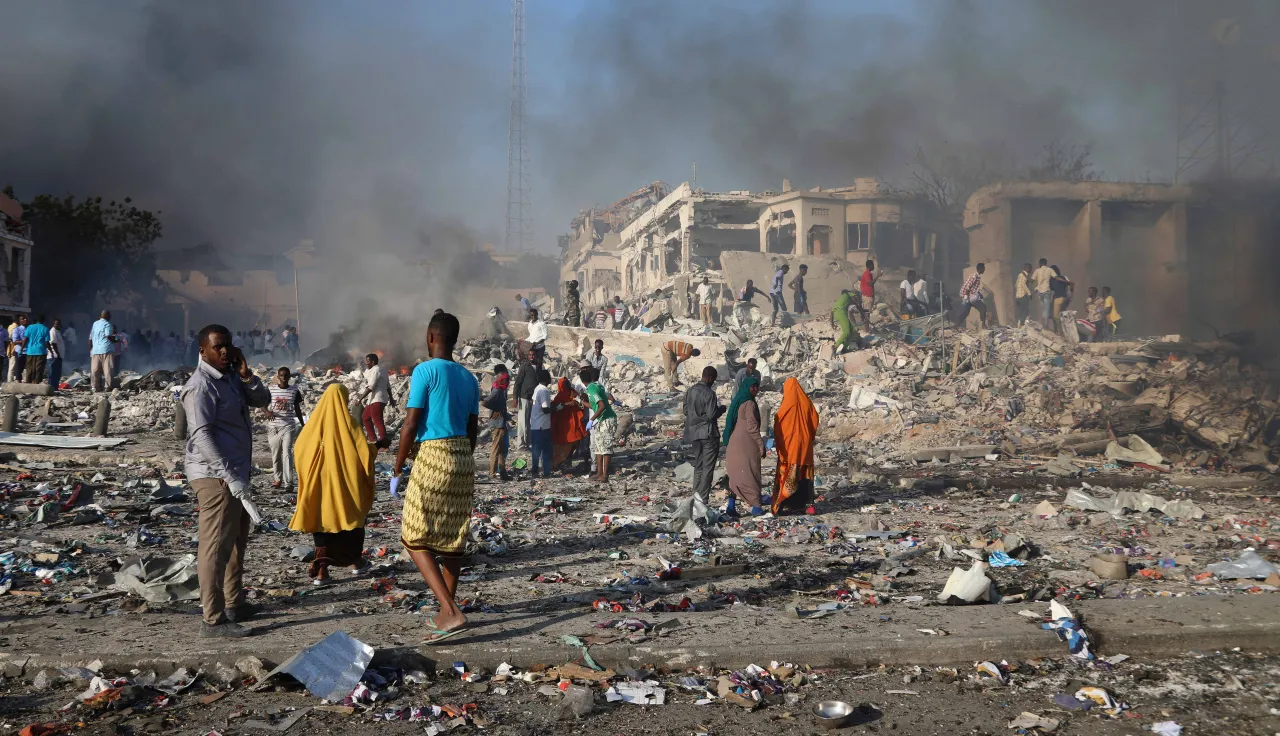
The ICRC has a clear and consistent public position towards all states when it comes to using explosive weapons in populated areas and respecting the rules of war.
Explosive weapons with a wide area effect are very likely to have an indiscriminate impact when used in populated areas. In addition to killing and maiming civilians, using these weapons in populated areas can disrupt or destroy essential services that civilians need for survival, such as health-care facilities, electricity, water and sanitation networks. Without them, civilian life becomes significantly harder or impossible, forcing people to move elsewhere in search of essential services. This is why the ICRC has been calling since 2011 for the use of heavy explosive weapons to be avoided in populated areas as a matter of policy. A policy of avoidance means that these weapons should not be used in populated areas unless sufficient mitigation measures are taken to reduce their wide-area effects and the risk of civilian harm.
Indiscriminate impact
Explosive weapons with a wide area effect may have an indiscriminate impact when used in populated areas if they have a large destructive radius, scatter fragments across a wide area or are so inaccurate that they will hit a larger area than the intended target. These weapons – which can include bombs and missiles, mortars and rockets, as well as some improvised explosive devices – are thus a major cause of harm to civilians.
The high risk of such explosive weapons having effects that go well beyond the targeted military objective makes it very difficult to use them in populated areas in compliance with international humanitarian law. This includes the duty that parties to conflict have to distinguish between military targets and civilians or civilian objects, and to avoid or minimize civilian harm. We have repeatedly made this position public for over a decade.
More than 90 states have already endorsed a 2022 Political Declaration on Explosive Weapons in Populated Areas and committed to ensuring that their armed forces adopt measures to avoid civilian harm, including by restricting or refraining as appropriate from the use of explosive weapons in populated areas, when their use may be expected to cause harm to civilians or civilian objects. We urge those states which have not yet done so to likewise endorse the declaration.
ICRC's public statements on the issue
- International Humanitarian Law and the challenges of contemporary armed conflicts (2011)
- Heavy explosive weapons in populated areas: A change of mindset is urgently needed (2022)
- Top UN, ICRC leaders urge stepped up global support to protect civilians from explosive weapons in populated areas (2022)
- ICRC president: "We are witnessing a global and collective failure to protect civilians in armed conflicts" (2024)
- ICRC president: Use of explosive weapons in populated areas requires a collective response (2025)
International support
The Political Declaration on Strengthening the Protection of Civilians from the Humanitarian Consequences Arising from the Use of Explosive Weapons in Populated Areas has been endorsed by 91 countries as of July 2026.
Related
 Article 30-07-2026
 ICRC holds exhibition in Seoul to mark the 60th anniversary of Republic of Korea’s accession to the Geneva Conventions
 Article 29-07-2026
 Frequently asked questions about the ICRC’s work in Yemen
 Legal factsheet 29-07-2026